
The Pyramid of Logical Levels (Duck Theory) – A Creative Thinking Framework for Photography
Estimated reading time: ~6 minutes
How a duck became my framework for creative direction.
I’ve spent nearly two decades working with images – photographing interiors, directing portraits, building visual narratives for brands, and creating conceptual work that sits somewhere between art, psychology and storytelling. Over time, what began to matter more than cameras or techniques was something far less tangible: how ideas form, and why certain images resonate while others don’t.
I didn’t arrive at this way of thinking by accident. Over the years, I was lucky to be shaped by thoughtful, demanding teachers and creative leaders who encouraged me to look beyond surface solutions and think in systems, stories and structures. My background spans a Master’s degree from London College of Fashion (University of the Arts London) and a BA in Audio-Visual Media from the Baltic Film and Media School at Tallinn University, alongside an Associate Distinction from the Royal Photographic Society in 2019. I’ve continued learning through courses and programmes at places like the Royal College of Art, Imperial College London, The Museum of Modern Art, the California Institute of the Arts, and through immersive storytelling practices developed by Punchdrunk and its alumni. All of this informs how I approach images — not just as pictures, but as carriers of meaning.
While leading creative thinking workshops myself, I noticed a pattern. People weren’t short of talent. They weren’t even short of ideas. They were stuck because they were trying to solve conceptual problems with technical solutions – or expecting technical excellence to magically create meaning.
That’s where Duck Theory emerged.
It’s my own adaptation of the Pyramid of Logical Levels – a model originally developed by Robert Dilts in the field of Neuro-Linguistic Programming – translated into a visual framework for photography and art. I use it as a thinking tool, a diagnostic device, and often as a gentle provocation.
The Pyramid, briefly
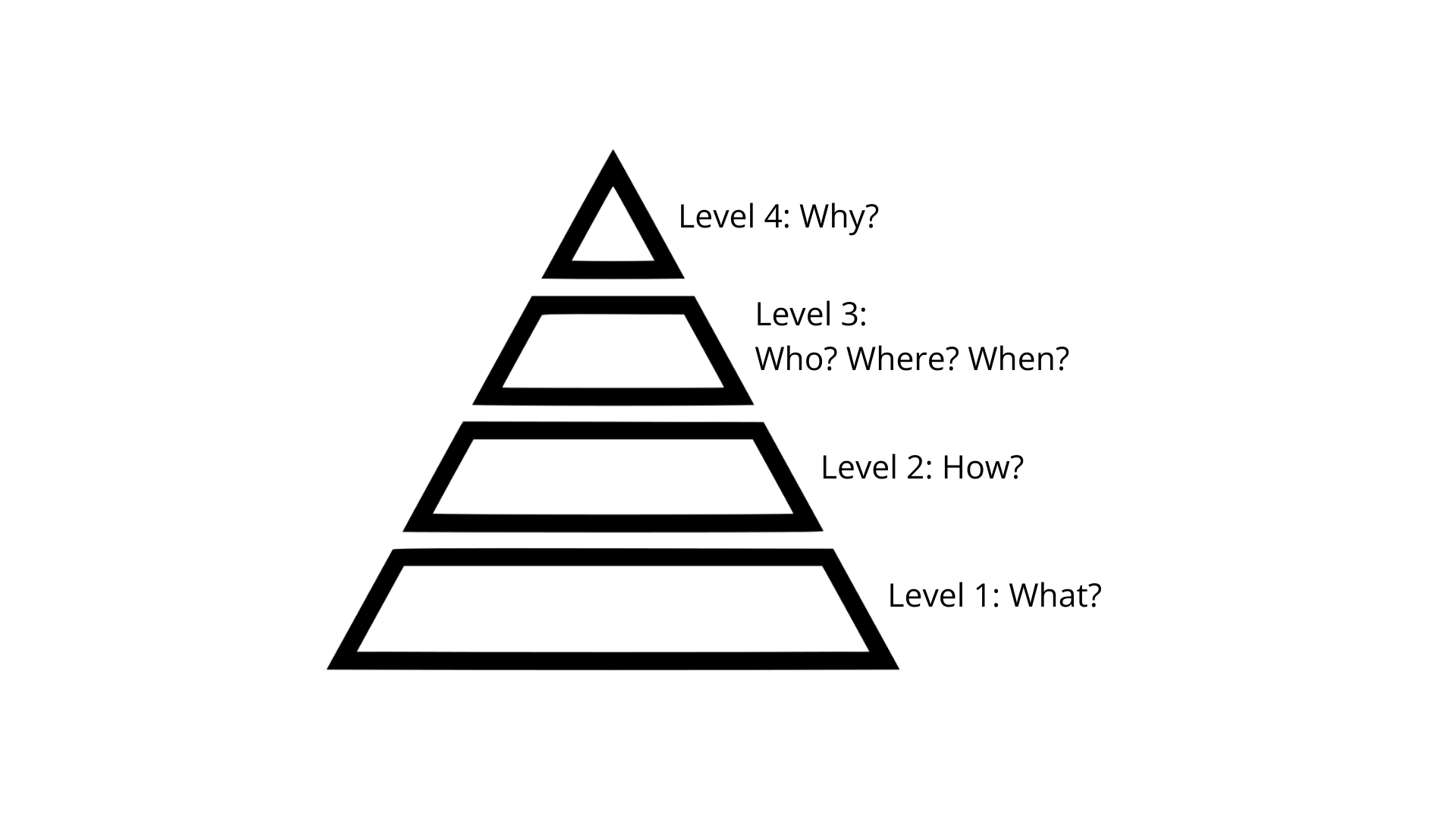
The Pyramid of Logical Levels proposes that human experience is organised hierarchically. At the base sit environment and behaviour – what we do, where we are. At the top sit identity and purpose – who we are, and why we act at all.
A crucial principle of the model is this:
change at a higher level automatically reshapes everything below it.
In creative work, this explains something many artists feel instinctively but struggle to articulate: why technical mastery alone doesn’t guarantee depth, and why some deceptively simple images carry enormous emotional or cultural weight.
To make this concrete, I use ducks.
Level 1 Duck – WHAT?
Observation, presence, the everyday
The first level is about what’s immediately available to you.
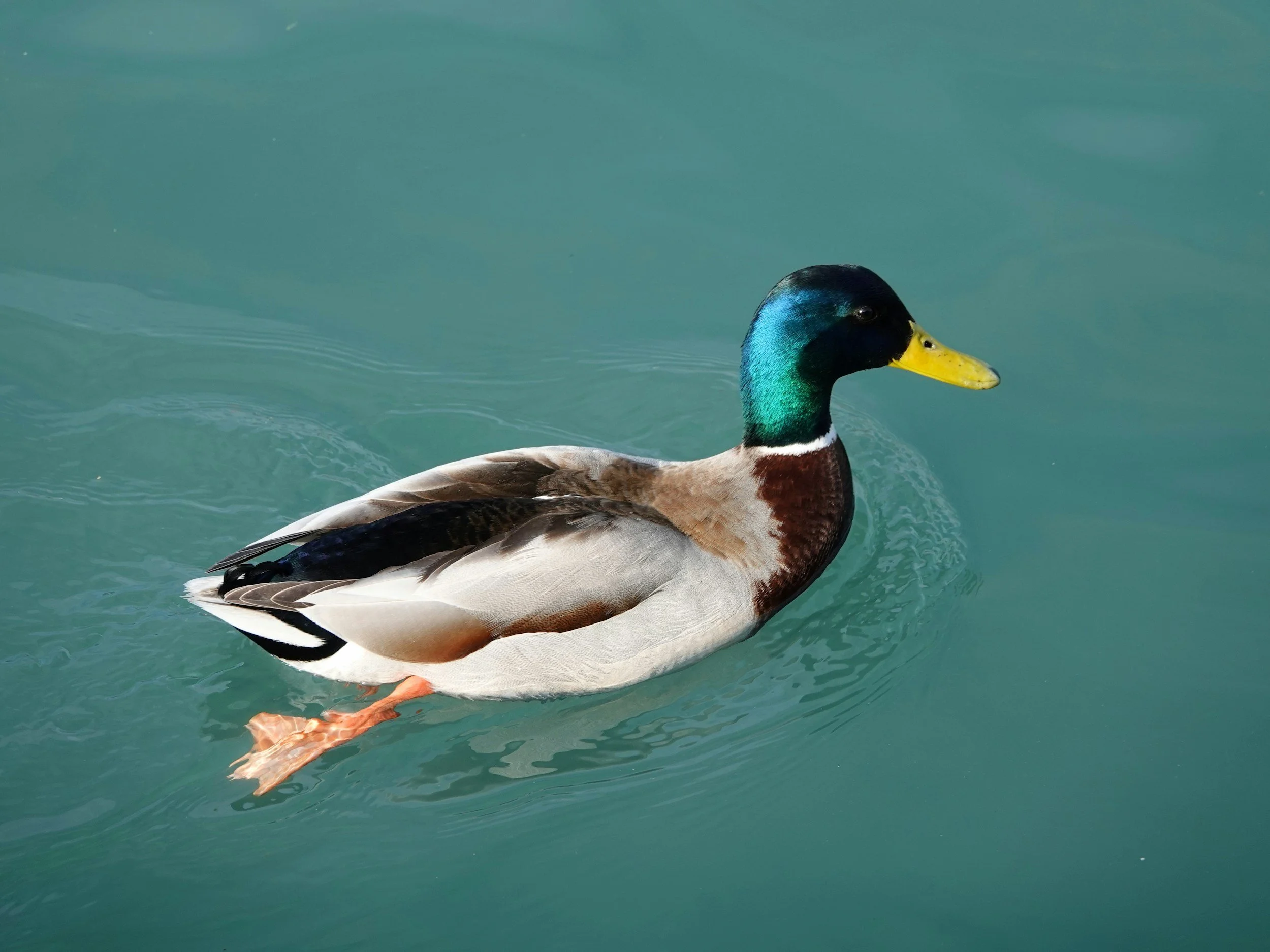
Picture a duck floating in a pond, photographed on a phone. Natural light. No intervention. A moment noticed in passing.
This is the most basic level of image-making, and also the most universal.
At Level 1, the questions are simple:
What do I have in front of me?
What can I capture right now?
What is happening in this moment?
This level is about attention. About being present enough to notice something worth recording. Most people’s camera rolls live here, whether they identify as photographers or not.
There is real value in this stage. It trains the eye. It builds visual awareness. But the intention remains minimal. The image documents reality rather than shaping it.
Level 1 ducks tell us what exists. They don’t yet tell us what it means.
Level 2 Duck – HOW?
Craft, mastery, visual intelligence
The second level begins when intention enters the process.
Now the question shifts from what is here to:
How do I create the image I see in my head?
The duck becomes a subject rather than a coincidence.
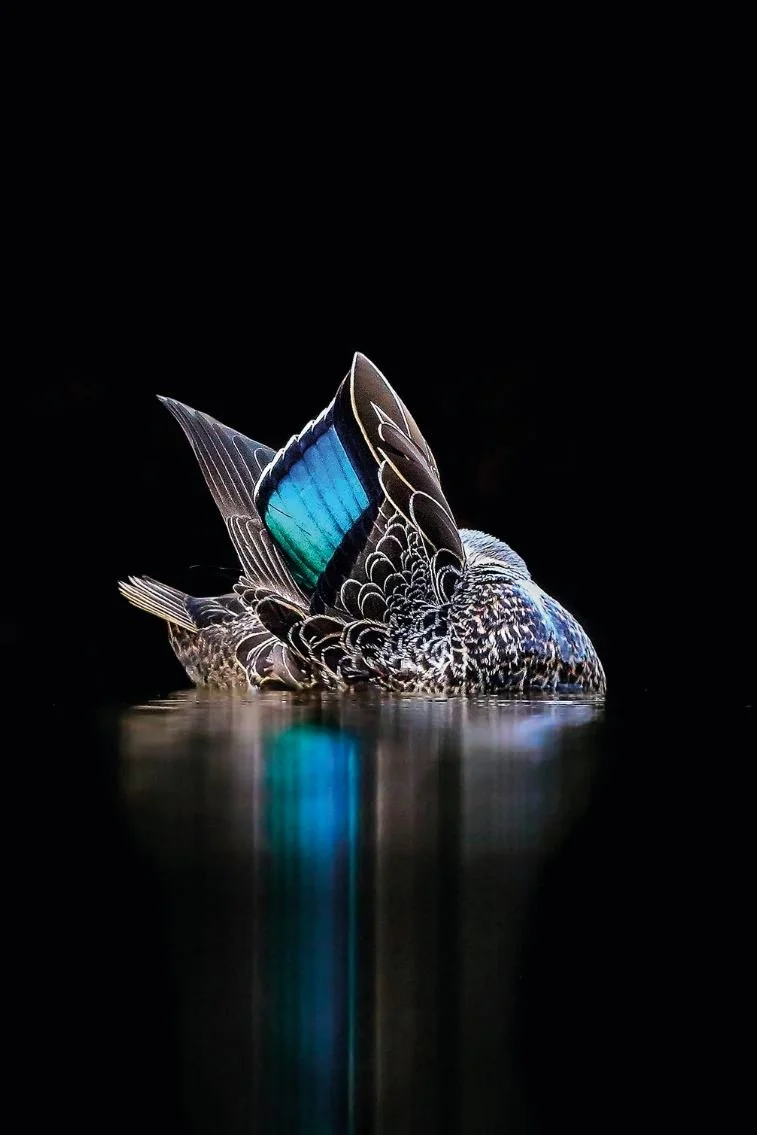
A perfect example is Pacific Black Duck by Georgina Steytler. This image immediately signals control. The black, mirror-like water removes distraction and isolates the form. The iridescent wings are revealed through precise timing and angle. The reflection doubles the visual impact.
To understand this image, you don’t ask what am I seeing?
You ask how was this achieved?
Level 2 thinking revolves around:
composition and visual balance
light, texture and colour
timing and patience
technical experimentation
deep familiarity with tools
This is the level of mastery. It’s where photographers earn recognition, publish in specialist magazines, and build reputations based on visual excellence.
Much of my interior photography is here. When I shoot for interior designers or magazines, the aim is to translate space into atmosphere – to control light, perspective and rhythm so a room feels cinematic rather than merely recorded.
Level 2 ducks are often stunning.
But conceptually, they are still ducks.
Level 3 Duck – WHO? WHERE? WHEN?
Symbol, narrative, direction
This is where photography begins to think like art history.
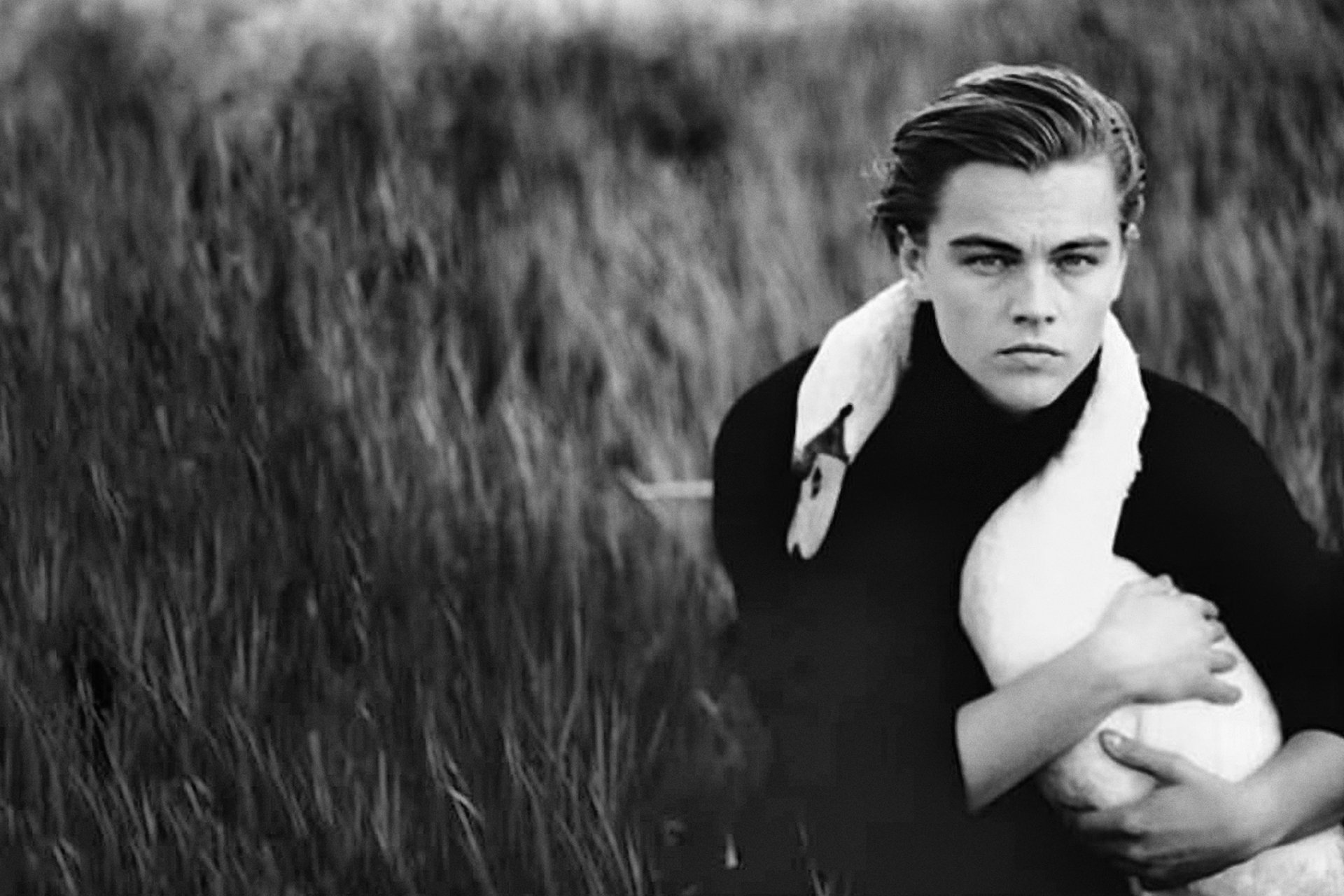
At Level 3, the duck becomes a swan – not because it changes species, but because it enters a system of meaning.
An iconic example is Leonardo DiCaprio with a Swan by Annie Leibovitz. On the surface, it’s a portrait. But to read it properly, you need cultural literacy.
Across cultures, swans carry rich symbolic weight:
In Greek mythology, swans are associated with Apollo – art, beauty, harmony – and with transformation through the myth of Leda and the Swan
In Celtic folklore, swans are liminal beings, crossing between worlds and identities
In Hindu tradition, the swan (Hamsa) symbolises wisdom and discernment – the ability to separate essence from illusion
In European painting, swans often stand for purity, tragic elegance or unattainable beauty
When you recognise this, the image changes. The swan stops being decorative and becomes narrative shorthand.
At this level, the photographer becomes a creative director.
The questions expand:
Who is my subject, really?
Where does this image exist culturally?
When is this story set – historically, emotionally, symbolically?
You begin to direct rather than observe. You assemble teams. You choose props, environments and gestures that communicate meaning. The image becomes readable in layers, much like a 17th- or 18th-century portrait where a flower, an animal or a colour reveals status, belief or fate.
Much of my portrait work sits at this level. I’m interested in identity, atmosphere and emotional subtext – images that can be decoded rather than consumed instantly.
An example is my fine art portrait project “Modern Gods“ recognised by the Fine Art Photography Awards.
Level 3 ducks tell stories.
Level 4 Duck – WHY?
Concept, metaphor, worldview
At the top of the pyramid, the duck disappears entirely.
And yet, it has never mattered more.
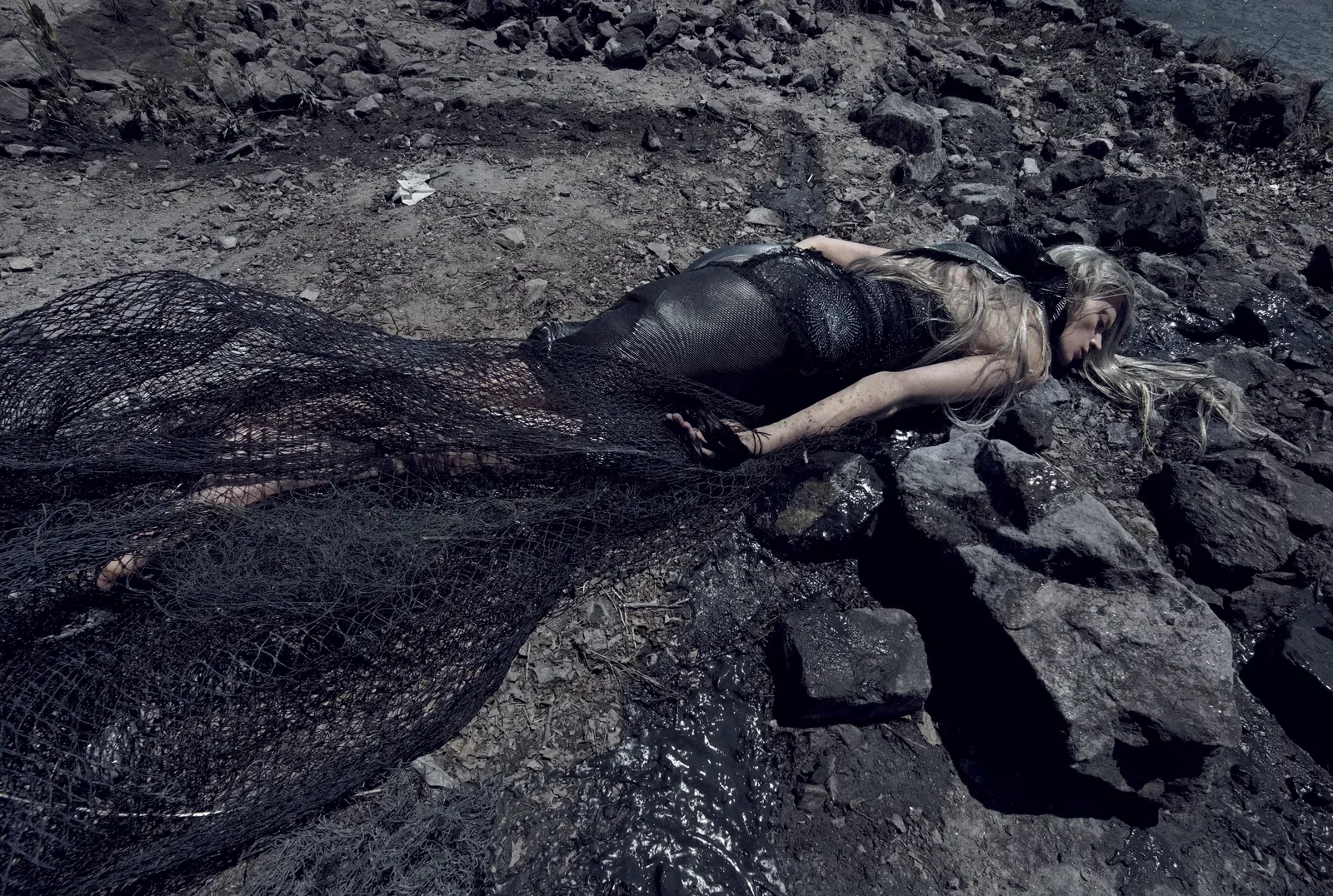
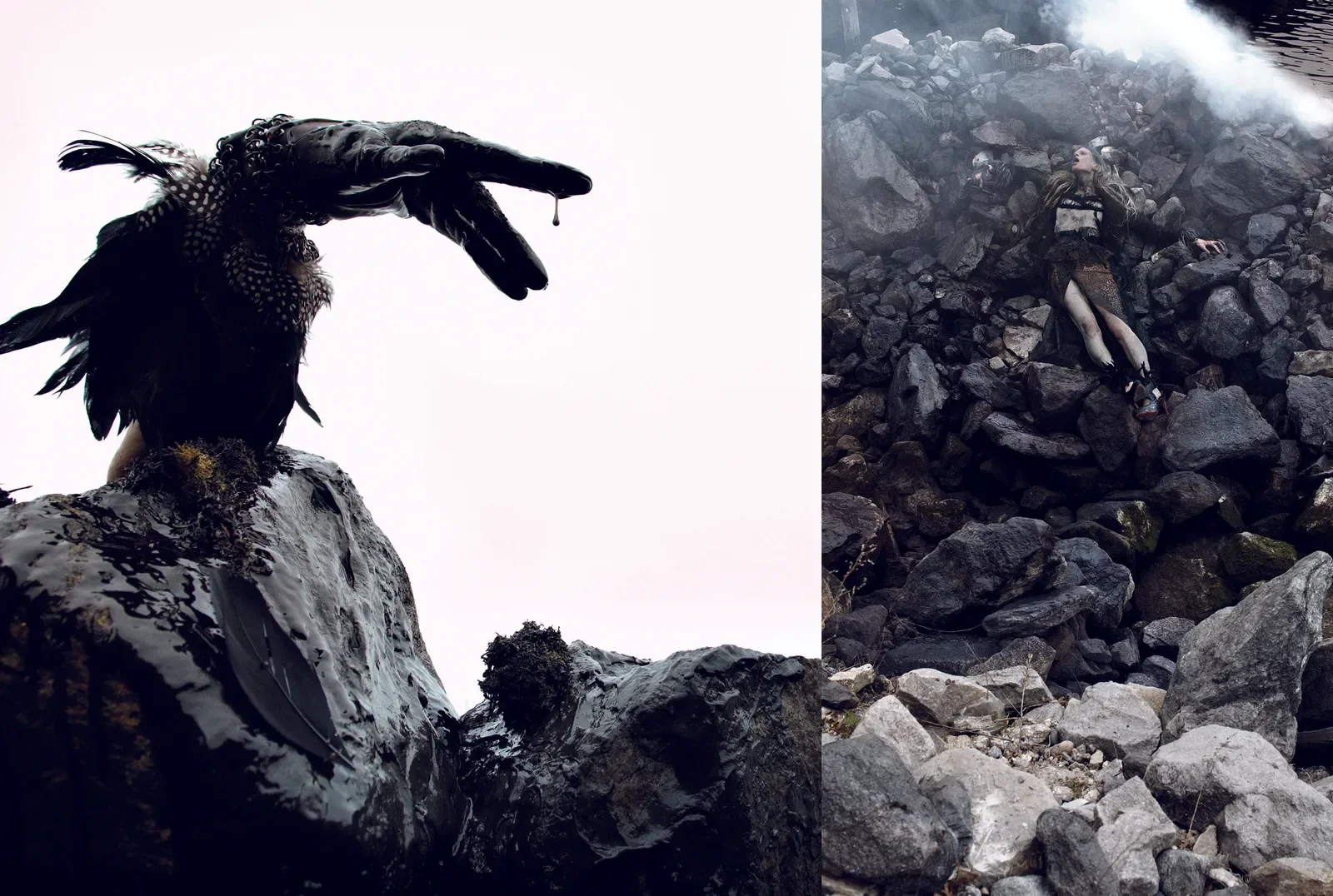
When Water & Oil shows bodies collapsed on oil-soaked shores. There are no birds in the frame, but the reference is unmistakable. The images echo photographs of seabirds after environmental disasters – their forms erased by pollution, their existence reduced to evidence.
Work at this level rarely lands subtly. When an image moves beyond depiction and into worldview, it stops asking to be liked and starts asking to be examined. Water & Oil is a clear example of how conceptual photography, once released into the world, becomes part of a wider ethical and cultural conversation. Some commentators argued that staging high-fashion imagery against the backdrop of the BP oil spill risked aestheticising real ecological trauma, turning environmental devastation into spectacle. Others defended the work as deliberately uncomfortable – a confrontation between luxury, complicity and collapse.
That tension is precisely what makes the series a useful example of Level 4 thinking: when an image operates at the level of purpose and worldview, it no longer seeks universal approval, but invites debate, friction and ethical questioning.
This is photography operating almost entirely through metaphor.
To understand these images, you don’t analyse technique first. You ask:
Why does this image exist?
What belief or concern is driving it?
What is being said about the world?
Level 4 is where photography becomes conceptual. Symbols replace subjects. Meaning outweighs execution. The work speaks about systems – environmental, political, cultural – rather than individuals.
This level revolves around:
purpose and mission
values and belief systems
identity and worldview
long-term, meaningful bodies of work
When I create music videos or narrative projects, I often aim for this level. Optimist by Plastic Barricades, for example, uses abstraction and atmosphere to speak about climate anxiety rather than illustrating it directly.
At Level 4, technical perfection is optional.
What matters is conviction.
Why Duck Theory matters
You don’t need to operate at all levels all the time.
But understanding them changes how you work.
The pyramid helps you:
diagnose why a project feels flat
recognise whether you need more craft or more concept
choose your creative approach consciously rather than instinctively
Some photographers build entire careers at Level 2, and do so brilliantly. Others move between levels depending on context. The point isn’t hierarchy – it’s awareness.
Key takeaways
Creative blocks often come from asking the wrong question.
Technique can’t fix a problem that lives at the level of meaning or purpose.
Duck Theory maps creative work across four levels:
observation (what), craft (how), narrative (who/where/when), and concept (why).Technical mastery is only one layer of impact.
Visually impressive work doesn’t automatically carry symbolic or conceptual depth.Understanding symbolism changes how images are read.
Objects, animals and settings carry cultural meaning that can transform an image into a story.Not every project needs to reach the top of the pyramid.
Clarity comes from choosing the right level intentionally – and excelling within it.The most resonant work aligns craft, story and purpose.
When these layers support each other, images stop documenting the world and start interpreting it.
Final thought
A duck is never just a duck.
I developed Duck Theory while leading creative thinking workshops, as a way to give artists and image-makers a shared language for understanding how ideas form, deepen and evolve. What started as a simple metaphor became a surprisingly precise tool for diagnosing creative blocks and expanding visual thinking.
Looking deeper doesn’t make creativity more complicated – it makes it more intentional.
Drawing from psychology, art history and systems thinking allows unexpected connections to surface, and those connections are often where the most meaningful work lives.
So next time we raise our cameras, it’s worth pausing to ask:
What level am I working on – and what might happen if I chose to move one level higher?
Duck Theory is a creative thinking framework developed by creative director and photographer Elina Pasok to help artists understand how meaning evolves from observation to concept.
A few people have asked whether this framework works as a talk or workshop — it does. If that would be useful for your team, feel free to message me.
